
All the Ways Mice Get Into Austin Homes
Dime-sized gaps, garage door seals, and the other entry points hiding in plain sight.
Read post →Light scratching in the walls after dark, droppings in the pantry, a chewed corner on the dog food bag: you have mice, and the cooler weather brought them in. We clear mice out of Leander and Austin homes and seal the gaps they used, with the exclusion work backed by a one-year warranty.
Free estimates · Family-owned since 2000 · Leander & Austin offices

What we do
Every mouse job starts with a free inspection. We find where the mice are nesting, which openings they are using to get inside, and how big the population really is.
A house mouse gets through a hole the size of a dime, and it will chew a smaller one bigger. So we look closer than most people expect: around pipes, vents, utility lines, garage door seals, and cracks in the foundation. What we find decides the treatment, instead of a one-size-fits-all plan.
We get the mice out of the house with baiting, trapping, and glue boards, matched to what the inspection turned up. Typically every mouse is gone within five to seven days.
A trap from the hardware store catches the mouse you saw. Where there is one there are usually more behind the walls, and house mice breed year round indoors when conditions are right, so we treat the whole population.
Once the activity stops, we remove any remains and set out a deodorizer to neutralize odors.
Then we seal the cracks and crevices the mice used to get in, plus the ones they could use next. That exclusion work covers your house from ground to roof level and comes with a one-year warranty.
Why now
House mice do not hibernate. When fall and winter cool things off, they go looking for a warm, dry place to nest, and a house gives them food, water, and heat in one spot. Texas A&M AgriLife Extension tells homeowners to expect more mice as the weather turns colder, and to close any gap a quarter inch or wider.
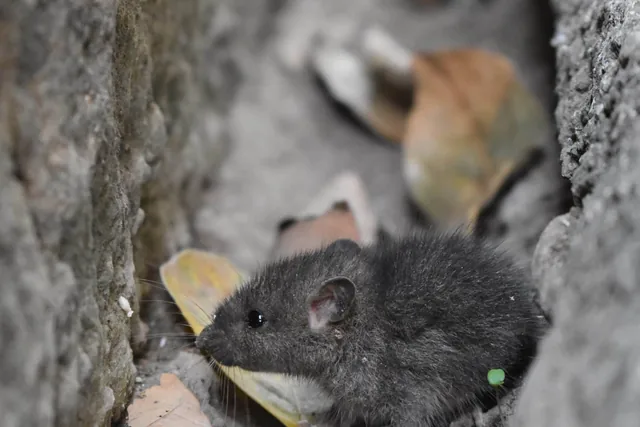
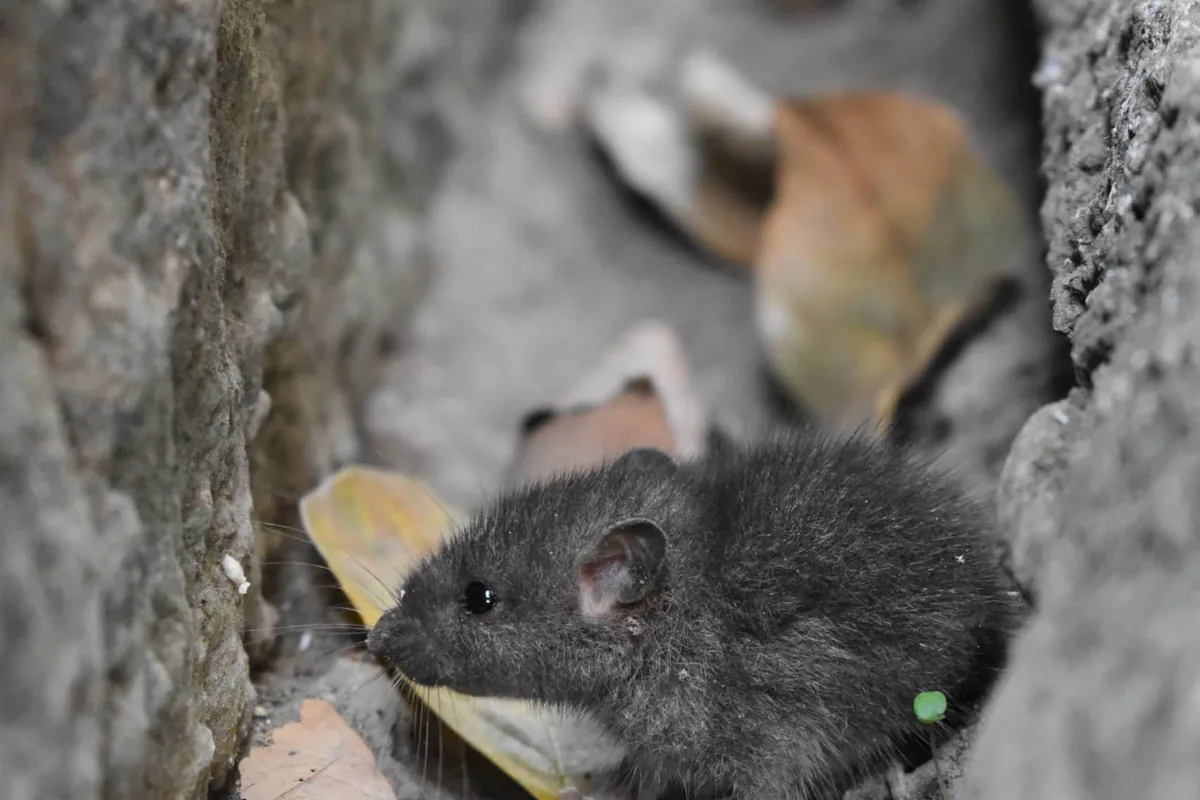
They are small and quick: grayish brown with a cream belly, big ears, a pointed snout, and a body only 2.5 to 3.75 inches long before the tail. You usually find the evidence first, like droppings in cabinets and along baseboards, chewed packaging, and dark rub marks on their routes. Mice spread leptospirosis, salmonellosis, and lymphocytic choriomeningitis through their urine and droppings, and they chew wiring, which is a fire risk. In Texas, deer mice are the species of particular concern for Hantavirus.
Hearing something heavier overhead? Rats use the same routes. Our rodent control page covers rats and mice together, the rodent guide shows how to tell them apart, and the attic noise guide sorts the sounds by time of night.
Free estimate
Whether by phone or by filling out our appointment form, we will help answer your questions, provide you with a free estimate, or get you scheduled for the services you need.
Neighbors first
Reliable, professional, punctual, friendly, worry-free service. My experience with them has never been anything less than that for several years now, and I have absolutely no reason to believe that will change for many years to come. I could not be happier with them.
We’ve had Accurate Pest Control service our property since 2008. They don’t try to sell us anything we don’t need. Our monthly service fee has been consistent and reasonable since 2008. It’s difficult to find a quality company in most home services, but you can count on Accurate Pest Control to take care of your property.
What a great company! I purchased an ant control plan that had a 1 yr warranty for our yard. One month later, new ant mounds in other parts of our yard. I called them and they came out and treated again at no charge. It’s been 2-3 months and no ants. They also treat my house and the chemicals they use aren’t harmful to animals.
I receive quarterly pest treatments and had them out for critters in the attic over the summer as well. Very friendly and helpful service! I felt safe with both men that came to help even though I was home alone. The price is competitive and fair. Would definitely recommend!
Keep learning
Dime-sized gaps, garage door seals, and the other entry points hiding in plain sight.
Read post →
The habits and small repairs that make your house a harder target for mice.
Read post →
How to tell mice from rats, the signs they leave, and what draws them into Central Texas homes.
Read the guide →Before you call
Size is the giveaway. A house mouse is 2.5 to 3.75 inches long without its tail, with big ears and a pointed snout, and it fits through a hole the size of a dime. Rats are much bigger: roof rats climb and nest in attics, while Norway rats burrow at ground level along the foundation. If you are not sure, the free inspection settles it, and the plan depends on the answer.
Clean houses get mice too. Mice come in for warmth and shelter as much as for food, and a gap around a pipe, a vent, or a worn garage door seal is all they need. Sealing those gaps is what keeps the next ones out.
Rarely. Where there is one mouse there are usually more nearby, and catching them one at a time while new ones keep coming through the same gap never really ends. Getting rid of mice for good means removing the population and closing the entry points behind it.
After the free inspection, we treat with baiting, trapping, and glue boards. Typically all the mice are out of the house within five to seven days. Once there is no more activity, we clean up and seal the entry points.
The exclusion work: the cracks and crevices we seal around the outside of your house, from ground to roof level, so mice cannot use them to get back in.
Our Leander office at 20605 Spanish Oaks and our northwest Austin office at 8127 Mesa Drive both take mouse calls, across Leander, Cedar Park, Liberty Hill, Round Rock, Georgetown, and greater Austin. Call (512) 267-0812 for the first opening in your neighborhood. Our Austin rodent control page has more on Austin homes.
If you are hearing scratching in the walls or finding droppings in the pantry, our team is here to help. Call today for a free estimate.